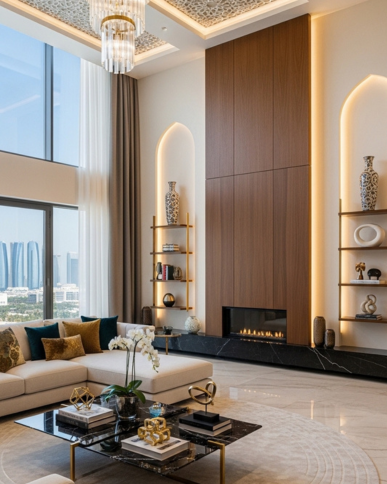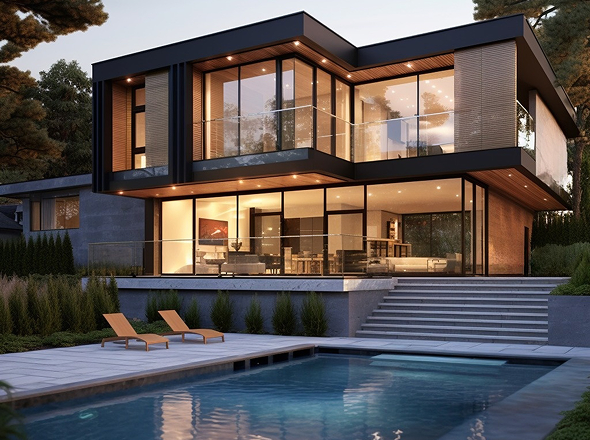
A villa owner in Abu Dhabi recently spent six months navigating material delays and permit revisions before realizing the original design vision had to be scaled back. Residential Interior Design Abu Dhabi requires homeowners to align personal style with local climate demands, Abu Dhabi Municipality permits, and realistic 2025-2026 budgets before any work begins. This guide walks through the exact decision sequence, cost ranges by room type, and villa-versus-apartment style comparisons that successful projects follow.
What This Guide Covers
- Step-by-step homeowner workflow including budgeting, permits, and climate considerations
- 2025-2026 AED cost ranges broken down by room with ROI notes
- Style suitability comparison table for villas versus apartments
- How to evaluate designers using criteria beyond portfolio photos
How to Choose an Interior Designer in Abu Dhabi Without Costly Mistakes
Knowing how to choose an interior designer in Abu Dhabi starts with three non-negotiable checks: confirmed licensing, recent local references, and a written commitment to deliver 3D Interior Design Visualization before any construction begins. Designers who provide visualization before signing reduce change-order costs by 30 percent on average, because material selections and layout decisions get resolved on screen rather than on-site. That single step protects your budget more than any contract clause.
Abu Dhabi Municipality requires stamped drawings for any structural or electrical changes under Building Code 2025. A designer unfamiliar with this requirement will cost you weeks of back-and-forth with the municipality before work even starts.
Many homeowners later regret choosing the lowest bid because the designer lacked experience coordinating with local suppliers during summer material shortages. Price alone does not predict project success. Local supplier relationships, permit knowledge, and a structured contract do.
Use this workflow before signing any agreement for interior design consultation in Abu Dhabi:
- Verify licensing and insurance with the relevant Abu Dhabi authority
- Request three recent local references and contact each one directly
- Review the contract payment schedule for milestone-based release of funds
- Confirm the 3D Interior Design Visualization deliverable is written into the agreement
Three Questions Every Contract Must Answer Before Work Starts
Your contract must answer three questions before work begins: Who controls the timeline, how are change orders priced, and who sources the materials?
Timeline accountability means naming specific completion dates and tying payment releases to Abu Dhabi Municipality inspection milestones. Payment schedules tied to Abu Dhabi Municipality inspection milestones protect both parties under standard practice. Without this structure, delays become financially invisible until the project is already over budget.
Change-order pricing needs a written formula. A flat percentage of added cost, agreed upfront, stops disputes mid-project. Clients who skip asking about summer lead times often face four-week delays when marble shipments arrive late, particularly between June and August when freight volumes peak across UAE ports. Ask your designer specifically how summer logistics affect their material sourcing schedule.
Material sourcing responsibility must sit with one party. Ambiguity here creates the most common mid-project conflict, where the homeowner assumes the designer ordered a specific tile and the designer assumed the homeowner would confirm the sample.
Red Flags That Appear in 40 Percent of First-Time Homeowner Projects
The most consistent warning sign is a designer who presents impressive renders but cannot name the local fabricator for custom millwork. Renders are not delivery plans. The ability to name a real supplier in Abu Dhabi, Al Ain, or Dubai signals that the designer has actually built what they draw.
Designers without established relationships with Al Ain or Dubai suppliers frequently miss 2026 delivery windows, because sourcing from unfamiliar vendors adds lead time that no timeline accounts for.
Two other red flags appear regularly in first-time projects: portfolios that show no completed Abu Dhabi work, and contracts with no change-order clause. A portfolio of completed local projects confirms that the designer has worked within Abu Dhabi’s permit system and supplier network. A contract without change-order terms gives you no cost control once construction begins. Identifying these issues before signing costs nothing. Discovering them at week eight costs significantly more.
Residential Interior Design Styles Popular in Abu Dhabi for Villas and Apartments
The residential interior design styles popular in Abu Dhabi fall into three broad categories: modern minimalist, transitional, and contemporary luxury. Each performs differently depending on whether you own a villa or an apartment, and each carries different maintenance demands under Abu Dhabi’s climate conditions.
Abu Dhabi’s extreme summer temperatures favor materials with high thermal mass such as local limestone, because these materials absorb heat slowly and cool quickly once air conditioning runs. Style choices that ignore material performance create comfort and durability problems within the first year.
Villa owners often discover that open-plan concepts popular on social media create echo problems in high-ceiling spaces without acoustic planning. That discovery typically happens after flooring is installed and furniture is delivered, making corrections costly.
| Style | Villa Fit | Apartment Fit | Climate Adaptation | Maintenance Level |
|---|---|---|---|---|
| Modern Minimalist | Moderate | High | Light colors reflect heat; requires dust-resistant surfaces | Low to medium |
| Transitional | High | Moderate | Layered window treatments manage solar gain; mixed materials | Medium |
| Contemporary Luxury | High | High | Natural stone, sealed surfaces, UV-resistant textiles | Medium to high |
Light-colored stone and reflective surfaces perform better in Abu Dhabi apartments with smaller windows, because they borrow brightness from limited natural light rather than competing with it. Luxury interior design in Abu Dhabi increasingly specifies sealed marble and matte-lacquered millwork for this reason.
Modern Minimalist Adaptations for Abu Dhabi Apartments
Modern minimalist design works well in Abu Dhabi apartments because the style’s preference for neutral palettes and flat surfaces suits compact floor plans and controlled lighting conditions. Neutral palettes reduce cooling loads in apartments with limited cross-ventilation, making them a practical choice beyond aesthetics.
The most common mid-project request from apartment owners who choose this style is hidden storage. Daily dust accumulation across Abu Dhabi makes open shelving a maintenance problem rather than a design feature. Specifying full-height cabinetry with flush handles and recessed niches addresses this from the concept stage rather than through post-completion additions.
Reflective surfaces, including lacquered panels, polished porcelain, and mirrored accents, help apartment spaces read larger without structural changes. These materials also respond well to focused accent lighting, which compensates for limited window exposure in mid-floor apartment units.
Transitional Style Advantages in Larger Abu Dhabi Villas
Transitional design suits larger Abu Dhabi villas because it absorbs scale without looking sparse. The style balances contemporary clean lines with warm upholstery, wood tones, and layered textiles, making a 400-square-meter living room feel occupied rather than empty.
Villas with south-facing windows benefit from layered window treatments specified in transitional schemes, where sheer panels manage direct sun while heavier drapes control privacy and heat at night. This layering addresses Abu Dhabi’s solar intensity without requiring blackout materials that flatten a room’s natural light quality.
Families with children report that transitional upholstery holds up better than pure minimalist fabrics during daily use. Performance fabrics in muted earth tones, which characterize transitional schemes, handle wear without showing it the way crisp white or pale grey minimalist selections do.
2025-2026 Cost Ranges for Residential Interior Design in Abu Dhabi by Room
The cost of residential interior design in Abu Dhabi varies by room type, finish level, and project complexity. The figures below reflect 2025-2026 market conditions for mid-to-high-end residential work in Abu Dhabi. Current material import duties and summer logistics add 12-18 percent to total project costs for 2026, so treat these ranges as planning figures rather than fixed quotes.
| Room | AED per sqm (Standard Finish) | AED per sqm (Premium Finish) | ROI Note |
|---|---|---|---|
| Living Room | AED 350 – 550 | AED 700 – 1,100 | High impact on resale presentation |
| Kitchen | AED 600 – 900 | AED 1,200 – 2,000 | Highest resale value return |
| Master Bedroom | AED 400 – 650 | AED 800 – 1,300 | Strong buyer perception value |
| Master Bathroom | AED 700 – 1,000 | AED 1,500 – 2,500 | Second-highest resale value return |
| Secondary Bedroom | AED 300 – 500 | AED 600 – 950 | Moderate impact |
Kitchen and master bathroom renovations deliver the highest perceived value at resale in Abu Dhabi villas. Homeowners who concentrate budget in these two rooms consistently see stronger property valuations than those who spread spending evenly across all rooms at a lower finish level.
Clients who allocate contingency funds of 15-20 percent early avoid mid-project compromises when marble prices fluctuate or a preferred tile is unavailable. Affordable interior design in Abu Dhabi does not mean low-cost materials. It means allocating budget where returns are highest and holding contingency where surprises are most likely.
Why Next Interior Design Delivers Better Results for Abu Dhabi Homeowners
Next Interior Design manages the full project scope from initial concept through final handover, without subcontracting the coordination to third parties. With 120+ completed projects across Abu Dhabi villas, apartments, and penthouses, the team brings direct knowledge of local permit requirements, supplier relationships, and climate-specific material performance that affects every design decision.
Every project begins with 3D Interior Design Visualization before any construction starts. Clients see accurate representations of materials, lighting, and layout before a single wall is touched. That process eliminates the surprises that cause costly mid-project changes.
- Local Abu Dhabi expertise with 4+ years and 120+ completed projects
- End-to-end concept to completion under one roof, with no coordination gaps
- 3D Interior Design Visualization delivered before construction begins
- Strict project management with on-time delivery and milestone-based progress
Schedule your free consultation at +971 52 278 7404 to discuss your villa or apartment project.
Frequently Asked Questions
What permits are needed for residential renovations in Abu Dhabi?
Structural and electrical work in Abu Dhabi requires stamped drawings submitted to Abu Dhabi Municipality for approval before work begins. Minor cosmetic changes such as painting or furniture replacement do not require permits. For any project involving residential interior design in Abu Dhabi that touches walls, ceilings, or electrical systems, confirm permit requirements with your designer before signing a contract.
How does Abu Dhabi climate affect material choices?
High temperatures, intense UV exposure, and daily dust make stone, sealed surfaces, and UV-resistant fabrics the most practical choices for Abu Dhabi homes. Delicate woods warp under humidity fluctuations from aggressive air conditioning cycling. Light-colored, sealed materials perform better long-term, reducing maintenance frequency and preserving finish quality across Abu Dhabi’s seasonal temperature range.
What is the typical timeline for a full villa redesign?
A full villa redesign in Abu Dhabi takes four to seven months from concept to completion, depending on project scope and permit approval timelines. Payment schedules follow construction milestones rather than calendar dates, which protects both parties. Summer months between June and September can extend material delivery windows, so starting the planning phase before April gives projects the best scheduling buffer.
How can I choose an interior designer in Abu Dhabi?
Choosing the right designer requires three steps beyond reviewing a portfolio. Verify current licensing and insurance, request contact details for three recent local Abu Dhabi references, and confirm the designer delivers 3D visualization before construction begins. Knowing how to choose an interior designer in Abu Dhabi also means checking whether the designer has direct experience with Abu Dhabi Municipality permit submissions.
What are the best interior design companies in Abu Dhabi?
The best interior design companies in Abu Dhabi are those with documented local project completions, transparent contract terms, and direct experience managing Abu Dhabi Municipality permits. Portfolio images tell you about aesthetic direction, but permit knowledge, supplier relationships, and client reference quality tell you whether a firm can deliver on time and within budget in Abu Dhabi’s specific regulatory environment.
Start Your Residential Interior Design Project with Clear Next Steps
Homeowners who begin with a documented workflow and realistic budget avoid the most common delays in Abu Dhabi projects. Sorting out permits, material lead times, and visualization approvals before construction starts is what separates projects that finish on schedule from those that drag for months.
Your next step for Residential Interior Design Abu Dhabi starts with a single call. Call +971 52 278 7404 for a free consultation.
—