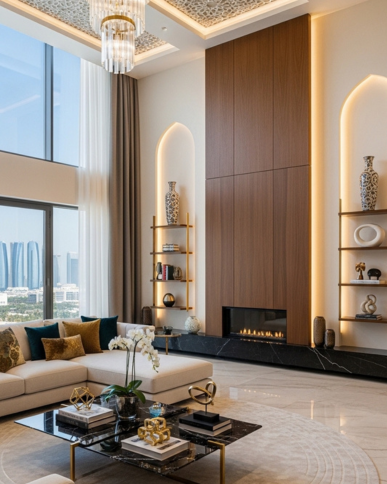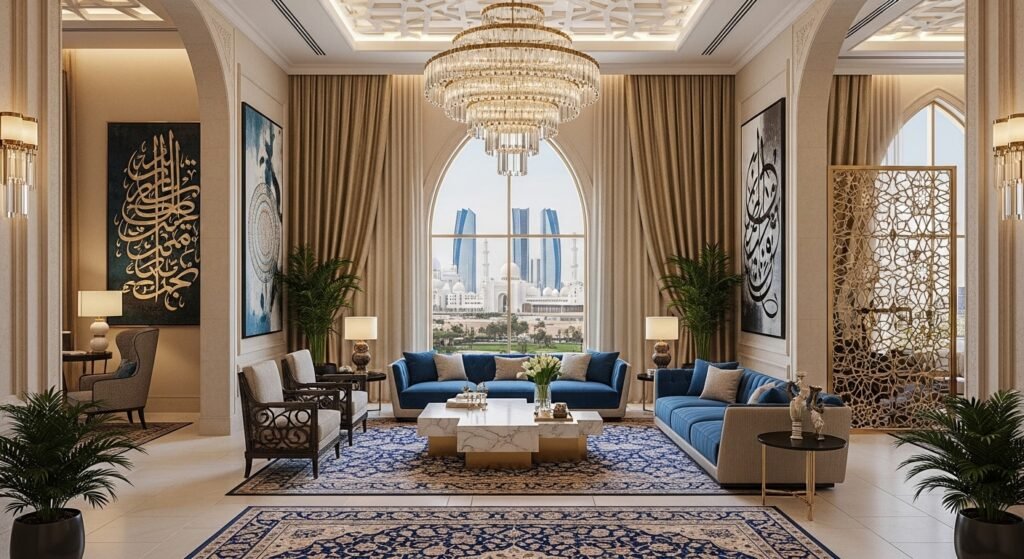
Picture a newly renovated Abu Dhabi villa where the living room feels cold despite AED 50,000 worth of imported furniture. The problem is not the furnishings. It is the lighting. Good lighting design tips for UAE residential interiors start with one principle: layer your light sources so that each room can shift between moods, support daily tasks, and draw attention to the spaces worth noticing.
Layered lighting in UAE homes means combining ambient, task, and accent sources into a single, controllable system. The local climate, high ceilings, strong coastal humidity, and near-constant air conditioning all shape which fixtures perform best and how you place them.
In this guide you will learn:
- How to apply layered lighting concepts adapted to UAE climate conditions
- Villa-specific layout strategies for large spaces with high ceilings
- Apartment solutions for compact rooms and natural light integration
- Energy-efficient and smart lighting options that meet local regulations
- How to choose fixtures that resist heat, humidity, and coastal dust
Layered Lighting Concepts for UAE Homes
Layered lighting is the foundation of every well-designed UAE residence. A single overhead light source creates flat, uninviting rooms. A properly layered scheme uses three types of light together: ambient for overall brightness, task for focused work, and accent for visual depth.
Ambient Lighting Sets the Mood
Ambient lighting provides the base level of illumination across a room. In UAE homes, recessed LED downlights are the most common ambient choice because they sit flush with ceilings, generate less surface heat than pendant-mounted sources, and work without obstructing air circulation from ceiling-mounted AC units.
Color temperature matters more in Abu Dhabi than in cooler climates. Warm white (2700K to 3000K) softens the harshness of midday sun flooding through large windows, while neutral white (4000K) suits kitchens and study spaces where task clarity takes priority. Avoid cool daylight temperatures (5000K+) in living areas; they visually compete with the already intense outdoor light and make interiors feel clinical.
A pattern seen across 120+ residential projects in Abu Dhabi is that homeowners who install dimmable ambient circuits report far greater satisfaction with their spaces, especially in open-plan villas where morning, afternoon, and evening moods shift dramatically.
Task Lighting for Daily Functions
Task lighting targets specific activity zones: kitchen countertops, bathroom vanities, reading corners, and home office desks. Under-cabinet LED strips in kitchens are among the most requested upgrades in UAE apartment renovations because they separate prep areas from ambient ceiling light.
The AC factor is worth addressing directly. Air conditioning ducts placed near ceiling fixtures can create temperature fluctuation around heat-sensitive LED drivers. Specify fixtures with external drivers located in accessible ceiling voids rather than integrated directly into the housing. This prevents premature driver failure in rooms where AC runs for 10 to 12 hours daily during summer months.
Accent Lighting Highlights Key Features
Accent lighting places light on objects, textures, or architectural features rather than on the room as a whole. Recessed adjustable spotlights, wall washers, and LED strip coves behind niches or above cabinetry all count as accent sources. In UAE villas with marble feature walls or ornate gypsum carvings, low-angle accent lights create shadow play that gives the surface visual weight it would otherwise lose under flat ambient light.
Abu Dhabi’s building regulations under the Estidama Pearl Rating System encourage low-wattage accent fixtures, and many newer villa communities mandate compliance documentation for all installed lighting. Planning accent circuits before construction makes compliance far easier and less costly than retrofitting.
Best Villa Lighting Ideas Dubai for Large Spaces
UAE villas present a specific set of challenges that apartment-focused lighting advice does not address: double-height entrance halls, open-plan living areas that connect interior and exterior zones, and outdoor terraces exposed to humidity and temperature swings. The best villa lighting ideas for Dubai and Abu Dhabi properties treat these challenges as design opportunities rather than obstacles.
High Ceilings and Open Layouts
Double-height ceilings above 4.5 meters require layered strategies at multiple levels. A statement chandelier or cluster pendant provides visual weight at the upper level, but it should not be the only light source. Supplement it with mid-level wall sconces and low-level floor lighting along architectural ledges to avoid the “black ceiling” effect that appears when a single hanging fixture is the sole source in a tall room.
For open-plan layouts common in villa designs across Khalidiyah and Al Raha Beach communities in Abu Dhabi, zone your lighting circuits to match functional areas. The dining zone, lounge area, and kitchen should operate on separate dimmers so that one section of the home can be lit for a dinner party while the kitchen dims after use.
Fixture selection at height must account for maintenance access. Recessed LEDs with 50,000-hour rated lifespans reduce the frequency of bulb changes in positions that require scaffolding or extension ladders.
Outdoor-Indoor Transitions
The boundary between indoor and outdoor living in UAE villas is a lighting design challenge unique to the region. IP65-rated fixtures are the minimum standard for any fitting installed in covered outdoor terraces, pool surrounds, or garden pathways. Coastal humidity in Abu Dhabi, particularly in districts near the Corniche and Yas Island, accelerates corrosion in fixtures rated below IP65.
Warm, low-glare bollard lights along garden paths and underwater LED pool lights create an outdoor atmosphere that complements interior warmth rather than creating a visual disconnect when viewed through large glass sliding doors. The transition reads as continuous when color temperatures on both sides stay within 200K to 300K of each other.
Creative Lighting Solutions for UAE Apartments
Apartment living in UAE towers presents a different set of constraints. Ceiling heights between 2.7 and 3.2 meters limit the fixture options that work without making a room feel cramped. Floor areas are smaller, and natural light entry depends on window orientation, which residents cannot change.
Compact Space Strategies
In compact UAE apartments, surface-mounted or semi-flush ceiling fixtures with wide beam angles spread ambient light without dropping too low into the occupied space. Avoid large pendant clusters in rooms with ceilings below 3 meters unless the pendants hang at the dining table where low placement is intentional and functional.
Mirrors positioned to face a wall-mounted uplighter or sconce double the perceived depth of a room. This is a cost-effective technique for studio and one-bedroom apartments in Abu Dhabi towers where the room width rarely exceeds 4 meters. Smart dimmer switches, available through UAE electrical retailers at accessible price points, let residents shift the same room from daytime workspace to evening lounge without changing any furniture arrangement.
Maximizing Natural Light
UAE apartments on east and west-facing orientations receive intense direct sunlight for several hours daily. Rather than blocking this with heavy curtains, use sheer diffusing blinds paired with warm artificial lighting at the perimeter of the room. This creates a layered effect where natural and artificial sources work together rather than competing.
LED strip lighting recessed into ceiling coves on south-facing walls bounces reflected light deeper into the room during morning and evening hours when direct sun is absent. This technique works well in apartments that face internal courtyards or have limited window-to-floor-area ratios.
Energy-Efficient and Smart Lighting Options
Energy consumption from residential lighting in UAE homes is measurable and controllable. Choosing the right fixtures and control systems reduces electricity bills, extends the life of the installation, and positions your home to meet current and upcoming Abu Dhabi Department of Energy requirements.
LED and Smart Controls
LED technology now covers every fixture category relevant to UAE residential design, from chandelier-compatible bulbs to outdoor IP-rated fittings. A standard LED replacement for a 50W halogen MR16 downlight consumes around 7W to 9W while producing equivalent output. In a villa with 60 to 80 downlights, that difference is meaningful across a full year of operation.
Smart lighting systems, controlled via smartphone apps or voice assistants, add scheduling, scene setting, and occupancy-based automation. Motion sensors in hallways and utility rooms eliminate the habit of leaving lights on in unoccupied spaces, which is a common source of waste in larger UAE villas. Systems by brands available across UAE electrical distributors integrate with home automation platforms already common in Abu Dhabi premium developments.
Local Regulations and Savings
The Abu Dhabi Department of Energy and Estidama guidelines for residential buildings specify maximum lighting power density (LPD) values for different room types. Staying within these values is a prerequisite for obtaining occupancy permits in new builds and major renovations. Working with a designer who understands LPD calculations from the planning stage prevents costly redesigns at the permit stage.
DEWA in Dubai and ADDC in Abu Dhabi both offer net-metering options for solar-assisted homes. Pairing low-draw LED systems with solar input reduces your peak-hour grid dependency, which reflects directly on utility bills during the summer months when AC and lighting loads run simultaneously.
Choosing Lighting Fixtures for UAE Homes
Fixture selection for UAE residential interiors requires matching aesthetics with climate performance. A fitting that looks right but corrodes, overheats, or fails within two years is not a design success. Lighting fixtures for UAE homes need to meet both visual and technical requirements.
Heat and Humidity Resistant Options
The UAE climate imposes two concurrent stresses on light fixtures: sustained high ambient temperatures and coastal humidity. For outdoor and semi-outdoor applications, aluminum or marine-grade stainless steel housings resist corrosion. Indoors, fixtures with sealed LED modules prevent dust ingress, which is a real factor in Abu Dhabi where dust storms during spring months coat every exposed surface.
In bathrooms, choose fixtures with IP44 minimum ratings for general placement and IP65 for areas directly above shower zones. Polished chrome finishes are susceptible to water spotting in humid bathrooms; brushed nickel or matt black powder-coated finishes show wear more slowly in high-moisture environments.
For chandeliers and decorative pendants in main living areas, ensure the fixture housing is sealed well enough to prevent insects from entering. Dust and insect accumulation inside open decorative shades is a maintenance problem specific to UAE climates that many imported fixtures from European catalogs are not designed for.
Budget and Sourcing Tips
UAE homeowners have access to a wide sourcing range: international brands through authorized distributors in Abu Dhabi and Dubai, mid-range options from local electrical wholesalers along Mussafah Industrial Area, and custom fabrication for bespoke joinery-integrated LED systems.
A practical approach is to allocate higher budget to fixtures in high-visibility positions, such as the entrance chandelier, dining pendant, and master bedroom bedside sconces, then source functional task and ambient fittings from mid-range UAE suppliers for secondary bedrooms and utility spaces. This keeps the overall project within budget without compromising the rooms that form a visitor’s first impression.
Request samples before committing to large quantities, and verify that replacement parts or bulbs are available locally. A fixture that requires international shipping for replacements becomes a long-term inconvenience in a country where renovation timelines move quickly.
Why Next Interior Design Gets Lighting Right
After 120+ completed projects across Abu Dhabi villas, apartments, and commercial spaces, Next Interior Design approaches every lighting brief with the same rigor as structural or materials planning. Lighting is never an afterthought in our process.
- Local climate knowledge: Every fixture recommendation accounts for Abu Dhabi’s heat, humidity, and dust cycle
- End-to-end service: From lighting concept to final installation, one team manages the full scope
- 3D visualization before execution: Clients see their lighting scheme in rendered form before a single wire is run
- Certified designers: Technical understanding of LPD calculations, IP ratings, and smart system compatibility
- Premium materials: Fixtures specified for durability in UAE conditions, not just aesthetics
- Timely delivery: Project management that keeps lighting installation on schedule within the broader fit-out timeline
- Fully customized: No two lighting plans are the same, because no two UAE homes are the same
Our work spans Khalidiyah villas, Al Reem Island apartments, and Yas Island residences. Every project begins with a free consultation so we understand your space, your lifestyle, and your expectations before we propose a single fitting.
Frequently Asked Questions
What are the best lighting tips for UAE homes?
The most effective approach for UAE homes combines three light layers: ambient for general brightness, task for functional areas, and accent for visual interest. Use dimmable LED circuits throughout, select warm white (2700K to 3000K) for living spaces, and choose IP-rated fixtures for outdoor and bathroom zones to handle coastal humidity and dust exposure.
How to design lighting for residential interiors in Dubai?
Lighting design for Dubai residential interiors starts with a circuit plan that separates ambient, task, and accent zones onto independent dimmers. Address high ceiling heights with multi-level fixture placement, use IP65-rated fittings in outdoor areas, and align your lighting power density with DEWA and Dubai Municipality permit requirements before finalizing fixture selections.
What types of lighting are ideal for UAE apartments?
UAE apartments benefit most from recessed LED downlights for ambient coverage, under-cabinet strips for kitchen task lighting, and LED cove lighting in ceiling reveals to add depth without consuming ceiling height. Wall sconces and mirror-facing uplighters work well in compact rooms where hanging pendants would reduce the perceived ceiling height.
How does color temperature affect UAE homes?
Color temperature shapes how a room feels against the intense natural light conditions in the UAE. Warm white (2700K to 3000K) in living and bedroom areas creates contrast with bright outdoor daylight, making interiors feel inviting after dark. Neutral white (4000K) suits kitchens and study rooms where visual accuracy matters more than warmth.
What lighting works best with UAE AC systems and high ceilings?
Recessed LED downlights with external drivers work best alongside UAE AC systems because the driver separates heat-generating components from the fixture body, reducing failure risk in rooms where air conditioning runs continuously. For high ceilings, combine a statement pendant at mid-height with recessed perimeter downlights and low-level sconces to create depth without relying on a single overhead source.
How to choose fixtures resistant to humidity and dust in coastal areas?
In coastal UAE areas, select fixtures with IP65 or higher ratings for outdoor and semi-outdoor positions, and IP44 minimum for bathrooms. Choose aluminum, marine-grade stainless steel, or sealed resin housings rather than open decorative frames. For indoor chandeliers and decorative pendants, confirm that the fixture body is sealed well enough to prevent dust and insect accumulation over time.
Start With the Right Lighting Plan
Layered lighting is what separates a well-designed UAE home from one that simply has lights installed. Climate, ceiling height, room function, and fixture durability all feed into decisions that affect how your space looks and lives every day. The most cost-effective moment to get those decisions right is before installation, not after.
To get a lighting plan built around your Abu Dhabi home, call Next Interior Design for a free consultation at +971 52 278 7404.
—